Kindred Spirits

In my senior year of high school, I took an advanced class in American Literature, together with a group of like-minded students. One of the books we studied was Sinclair Lewis’s Main Street. We were amused by his satirical portrayal of provincial pretentions. The heroine, Carol Kennicott…
…had often been invited to the weekly meetings of the Thanatopsis, the women's study club, but she had put it off. The Thanatopsis was, Vida Sherwin promised, "such a cozy group, and yet it puts you in touch with all the intellectual thoughts that are going on everywhere."
We learned that the name, “Thanatopsis,” came from a poem by William Cullen Bryant. When we searched for it in the school library, we found it—accompanied by an illustration: “Kindred Spirits,” a painting by Asher Brown Durand that showed Bryant and Thomas Cole (the founder of the Hudson River School of painting) on a picturesque rock, somewhere in the Catskills.
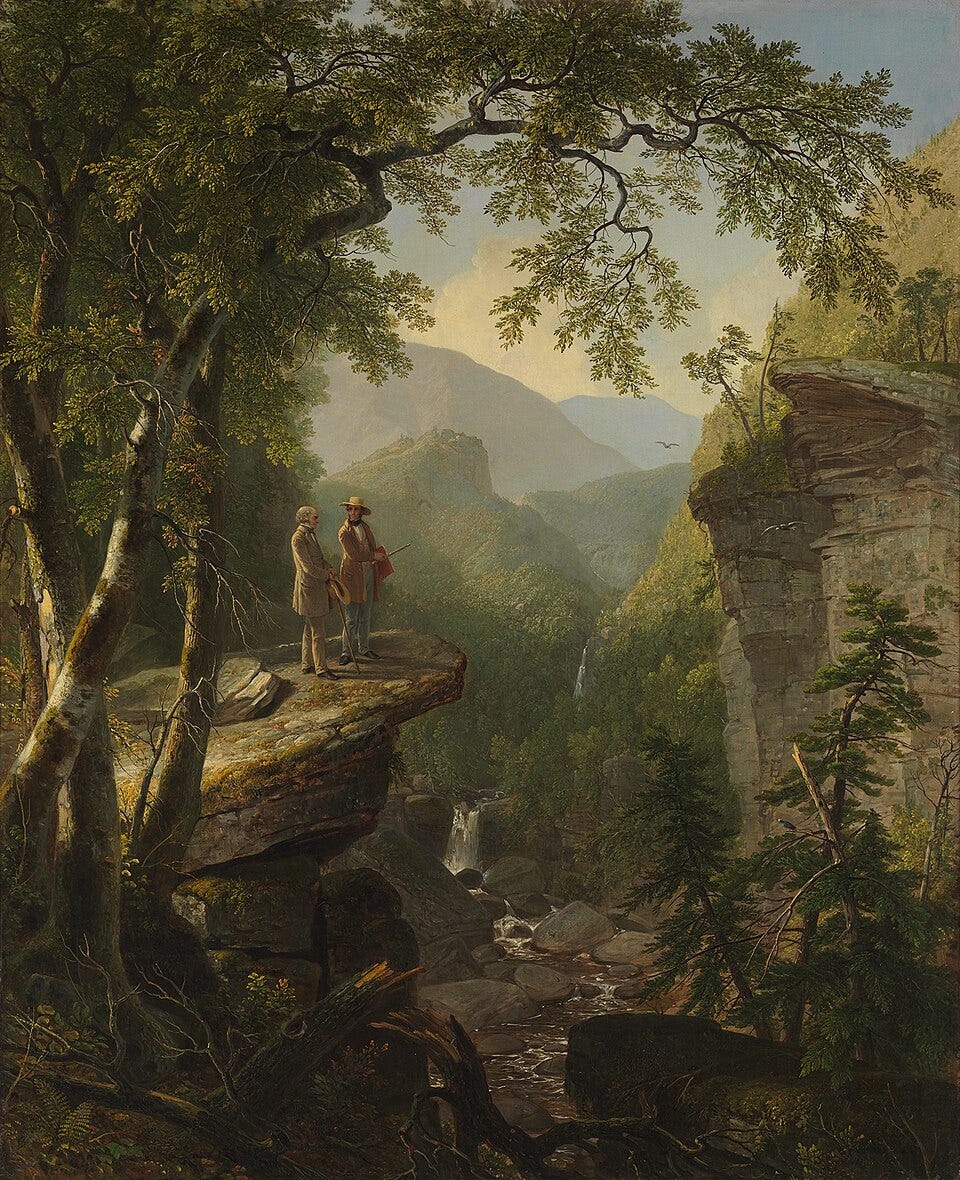
This painting used to hang in the Main Reading Room of the New York Public Library, and I sat below it while writing book reviews, almost fifty years ago. It has since been sold to The Getty Museum.
We, being arty and literarily-inclined—not to mention adolescently pretentious—decided to form our own Thanatopsis Club. We meant it as a joke—but it soon became a kind of clique with more than a hint of adolescent exclusivity. Instead of mockery, we recreated our own Gopher Prairie.
Years later, when I began making meticulously detailed drawings from nature (mostly of wildflowers, insects, and feathers), I began reading writers on natural history. One of my favorites was John Burroughs. Like Burroughs, I was an autodidact. While he was inspired to write by reading essays of Emerson, I filled my journals with observations of nature, inspired by Burroughs.
I lived in the Catskills and the Hudson Valley (as I still do), and Burroughs seemed to be everywhere. I have written about Burroughs elsewhere, so no need to repeat it here. It recounted my visit with John Burroughs’ granddaughter at his study, Slabsides.
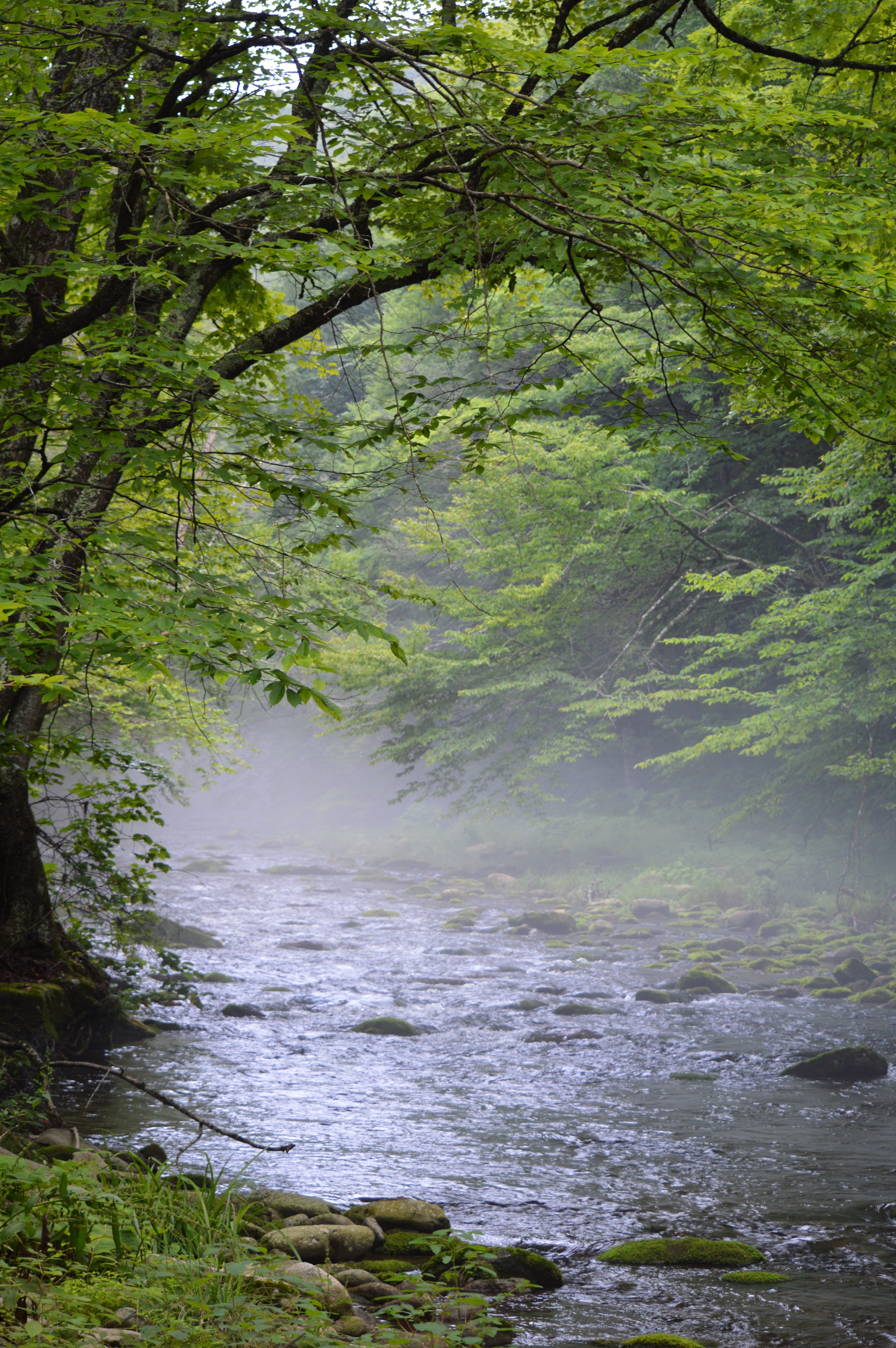
The upper Rondout
My favorite trout stream—the headwaters of Rondout Creek—runs through a valley called “The Peekamoose” (a spot of which Burroughs was also very fond). It is directly behind High Point, where I rented a small cabin called “The Bear Trap Spring Camp.” The water from Bear Trap Spring eventually drains into Rondout Creek, much further downstream, near the town of Accord. I began to be fascinated by the creek—and considered writing a history of it.
At various times, I have lived in proximity to the Rondout. In High Falls, where Burroughs once taught school, I lived in an old train station less than a hundred yards from its waters. Until very recently, I lived in Kingston’s Rondout district—where, once the trees have dropped their leaves, I could see sparkling light bouncing off the creek’s surface. The Rondout finally ends at the Hudson, less than a mile from our Kingston house.
We have recently moved south, but still live close to the Hudson. Our new home, like our old Catskill cabin, is next to a tiny tributary that feeds the river. Route 9W, parallel to the river, connecting our old and new homes, takes us past Burroughs’ home—and the turn-off that leads to “Slabsides.”
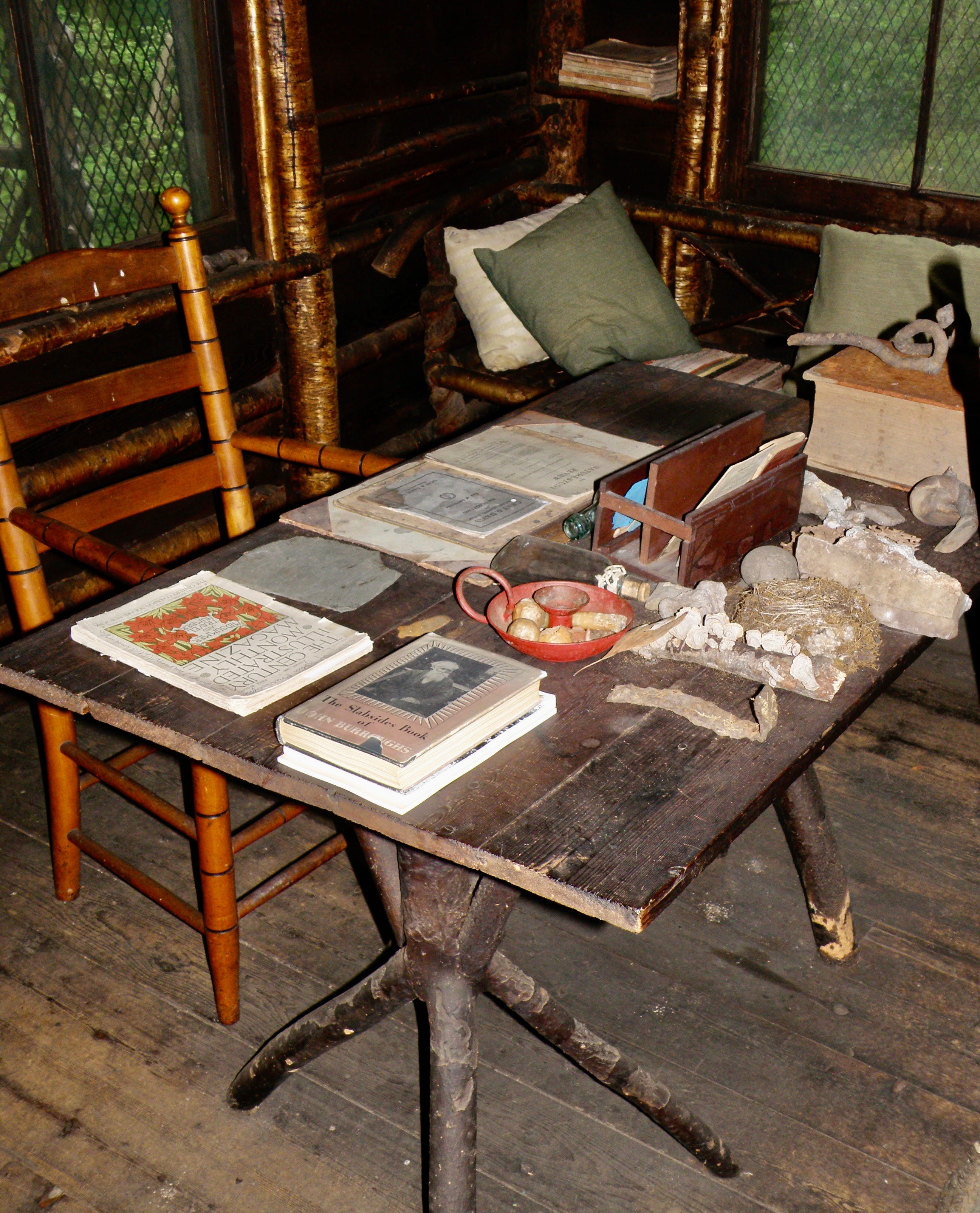
The desk that Burroughs made at Slabsides
The route also takes us past Black Creek, where I once netted migrating herring. Burroughs took his friend—Walt Whitman—on a hike there (in 1878, after Whitman had attended William Cullen Bryant’s funeral). Just a hundred yards further, we once attended a wedding in an old creamery that had been designed by Burroughs’s son, Julian.
Burroughs was so well-known, in his lifetime, that he accumulated many famous friends (Thomas Edison, Henry Ford, Harvey Firestone, among others). I keep coming across connections to him. Because I had met with Burroughs’ granddaughter, I can immodestly claim to be considered to be connected to all of Burroughs’ friends (think Kevin Bacon’s “degrees of separation,” which are really degrees of connection). That means there are just three degrees of separation between me, Walt Whitman, and Thomas Edison; a pretty unlikely trio!
Not to put too fine a point on it, but the parallel streams of Rondout Creek and Burroughs’s degrees of separation suggest they might be connected, if only in metaphor. But it’s too tenuous to make, right now.
Paid subscribers to these substack pages get access to complete editions of two of my novellas. Noirvella is a modern story of revenge, told in the style of film noir. Unbelievable is a kind of rom-com that forms around a pompous guy who is conceited, misinformed, and undeservedly successful. Both books are sold by Amazon, but paid subscribers get to read them for free. Also, substack pages (older than eight months) automatically slip behind a paywall—where only paid subscribers can read them. If you’re interested in reading any of them, you can subscribe (giving you free access to them), or buy them in book form should you prefer the feel of a physical book. Meanwhile, it is easy to become a paying subscriber (just like supporting your favorite NPR station). It’s entirely optional, and—even if you choose not to do so—you’ll still get my regular substack posts—and I’ll still be happy to have you as a reader.
i misread Harvey Firestone as Harvey Fierstein…and wondered at the degrees of
silly -ration.
I enjoyed this piece, thank you. Re your tenuous connection, maybe it also means that you are old! I am quite old myself, LOL.